
Flat vs Gusseted Bags vs Tubing
April 14, 2026
How To Evaluate Cleanroom Packaging Suppliers
June 11, 2026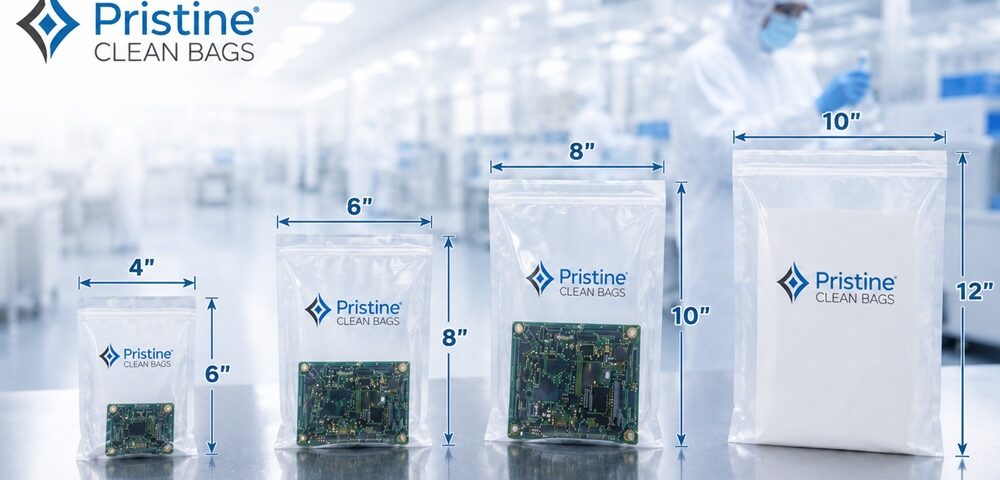
Custom Cleanroom Bags: When You Need Them and What to Specify
Standard cleanroom bags work for many applications, but they do not solve every packaging problem.
As production needs become more specific, packaging requirements often become more specific as well. Standard sizes may create excess material. Off-the-shelf thickness may not hold up during handling. In some cases, the issue is not the bag itself but how it fits into the workflow.
Custom cleanroom bags are often used to solve operational problems that standard packaging cannot address efficiently.
The challenge is knowing when customization improves performance and what specifications matter before placing an order.
Jump to Section:
What “Custom” Means in Cleanroom Packaging
When Standard Bags Start Creating Problems
Where Custom Cleanroom Bags Provide the Most Value
Example: When Standard Bags Create Process Inefficiencies
Key Specifications to Define Before Ordering
Material Selection
Thickness
Dimensions and Fit
Packaging Format
Cleanroom and Compliance Requirements
Where Customization Decisions Go Wrong
Why Many Operations Simplify Packaging Over Time
Questions to Answer Before Requesting a Custom Quote
Manufacturing Consistency Matters More Than Customization
Common Questions
What “Custom” Means in Cleanroom Packaging
Custom cleanroom packaging is not limited to size changes.
Customization can involve:
- Material selection
- Thickness adjustments
- Bag dimensions
- Sealing configuration
- Packaging format
- Sterilization compatibility
- ESD protection requirements
In many cases, the goal is not to create something unusual. The goal is to reduce variation and improve consistency within the process.
When Standard Bags Start Creating Problems
Packaging issues often appear gradually.
At low volume, oversized or generic bags may seem acceptable. As throughput increases, small inefficiencies become more noticeable.
These issues affect packaging cost, but also influence handling time, contamination exposure and product consistency.
Where Custom Cleanroom Bags Provide the Most Value
Custom cleanroom bags usually provide the most value in environments where repeatability matters.
High-Volume Production
Small inefficiencies become expensive at scale.
If operators spend extra time handling oversized bags or adjusting poor fit, those delays can repeat across every shift and every batch.
Custom sizing can help reduce excess material, simplify handling and improve consistency across packaging steps.
Sensitive or High-Value Components
Products with sharp edges, unusual geometry or contamination sensitivity often require tighter packaging control.
Standard bags may allow the product to shift during transport or create unnecessary internal movement.
Custom dimensions and material selection help reduce these variables.
Regulated Manufacturing Environments
Medical, pharmaceutical, electronics and life science environments often require tighter process control.
Custom packaging may support:
- Traceability requirements
- Validation processes
- Material consistency across batches
- Defined contamination control procedures
Example: When Standard Bags Create Process Inefficiencies
A company packaging precision components may use oversized stock bags to simplify inventory. At first, this seems practical because one bag size covers several product types.
Over time, the extra material can create problems. Operators may need more time to position the product. The product may shift during transport. The excess plastic may also make sealing less consistent.
In that situation, custom bag dimensions or cleanroom tubing may reduce material waste and improve repeatability across the packaging process.
This is where customization has real value. It solves a workflow problem, not just a sizing issue.
Key Specifications to Define Before Ordering
Customization only works when specifications are clear.
These details should be defined before production begins. Unclear specifications can lead to revisions, delays, or packaging that does not match the process.
Material Selection
Material affects flexibility, strength, particle generation and chemical compatibility.
Common options include:
- LDPE for flexible, general-purpose cleanroom use
- HDPE for increased rigidity and lower particle generation
- Nylon for puncture resistance and stronger protection
- Moisture barrier materials for humidity-sensitive products
The correct material depends on the product, handling conditions and cleanroom requirements.
Thickness
Thickness affects durability, flexibility and sealing behavior.
A thicker bag may improve puncture resistance, but it can reduce flexibility and slow handling in high-volume workflows.
Thickness should match:
- Product weight
- Product shape
- Transport conditions
- Handling frequency
- Failure risk
The best choice is the thickness that protects the product without creating unnecessary handling issues.
Dimensions and Fit
Sizing affects contamination exposure more than many teams expect.
Oversized bags create excess internal movement. Undersized bags can cause poor sealing, product damage, or difficult handling.
The goal is controlled fit, not maximum space.
A good custom bag should allow enough room for loading and sealing while limiting unnecessary material around the product.
Packaging Format
Format affects workflow.
Flat bags work well when product sizes are consistent. Tubing works well when product lengths vary or when one roll can replace several pre-sized bag options.
In many cleanroom operations, simplifying the format can improve consistency over time.
Common format choices include:
- Flat cleanroom bags
- Cleanroom tubing
- Moisture barrier packaging
- Specialized cleanroom bag configurations
Cleanroom and Compliance Requirements
Some applications require added specifications before production begins.
These may include:
- Double bagging
- Gamma sterilization compatibility
- ESD protection
- Lot traceability
- Moisture barrier protection
- Cleanroom packaging requirements
These requirements should be confirmed early. Adding them later can affect material choice, lead times and validation steps.
Where Customization Decisions Go Wrong
Customization adds value when it solves a real process issue.
Problems occur when specifications are added without a clear operational reason.
Common issues include:
- Over-specifying thickness
- Creating too many size variations
- Choosing materials based on assumptions
- Customizing around rare exceptions instead of standard workflow needs
- Ignoring lead time or inventory impact
Over-customization can increase cost and complexity without improving performance.
Why Many Operations Simplify Packaging Over Time
In many cleanroom environments, packaging systems become simpler as processes mature.
Teams may start with broad sizing ranges or several packaging formats to handle different products. Over time, the focus often shifts toward fewer, more controlled options.
This can lead to:
- Fewer bag sizes
- More consistent material selection
- Reduced excess packaging
- Better alignment between packaging and workflow
The objective is process control. Too many options can create variation.
Questions to Answer Before Requesting a Custom Quote
Before requesting custom cleanroom bags, define the following:
- What are the product dimensions and weight?
- Does the product have sharp edges or unusual geometry?
- How often will the bag be handled?
- Will the product be transported or stored for long periods?
- What material properties are required?
- Are there sterilization, ESD or moisture control needs?
- What order volume is expected?
- Are repeat specifications required across future orders?
Clear answers help reduce revisions and make the quoting process more accurate.
Manufacturing Consistency Matters More Than Customization
A custom specification only works if it can be reproduced consistently.
Variation in thickness, dimensions or sealing quality can create issues even when the original specification is correct.
When evaluating a supplier, consider:
- Manufacturing controls
- Quality assurance processes
- Material consistency between batches
- Ability to maintain repeat specifications
- Cleanroom packaging experience
Pristine Clean Bags® supplies custom cleanroom packaging solutions including poly bags, tubing and barrier materials manufactured under controlled conditions.
You can explore available cleanroom packaging solutions, review cleanroom poly bag options, or evaluate cleanroom tubing configurations based on your application requirements.
Common Questions
When should a company switch from standard to custom cleanroom bags?
Custom packaging usually becomes valuable when standard bags create handling inefficiencies, excess material use, poor fit or repeatability issues.
Are custom cleanroom bags only used in high-volume manufacturing?
No. High-volume operations often benefit the most, but custom bags are also used for sensitive or specialized products where fit and material performance are critical.
Can custom sizing reduce contamination risk?
It can help. Better fit can reduce internal movement, excess material and unnecessary handling during the packaging process.
Is cleanroom tubing better than custom bags?
It depends on the application. Tubing may be a better option when product sizes vary because it allows custom lengths without stocking many pre-sized bags.
What should be included in a custom cleanroom bag quote request?
A quote request should include material, thickness, dimensions, format, quantity, cleanroom requirements, and any special needs such as ESD protection, sterilization compatibility or moisture control.