Heat Sealing Cleanroom Bags: Common Seal Problems and How to Prevent Them
September 9, 2026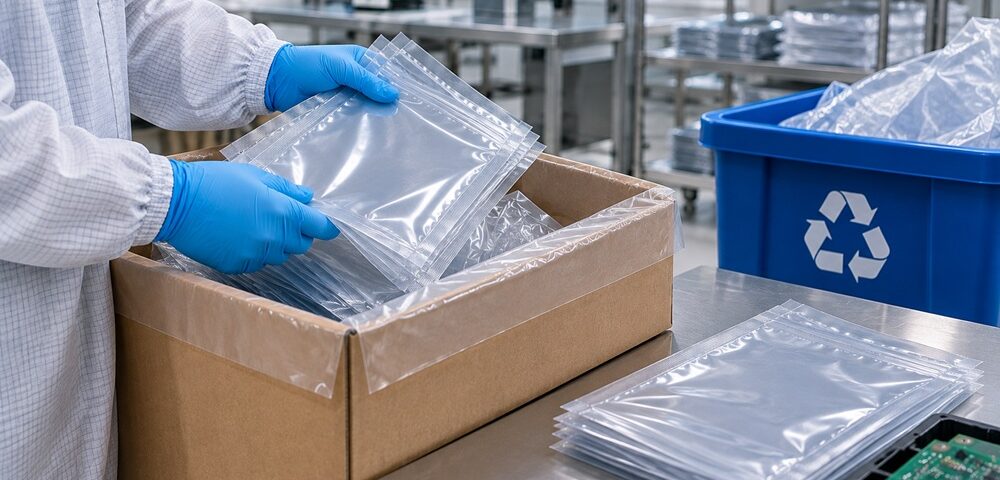
How to Reduce Plastic Waste in Cleanroom Packaging
Cleanroom manufacturers use large quantities of polyethylene bags, tubing, and films to protect sensitive products during production, storage, and transportation. Much of this packaging is discarded after a single use, creating a challenge for companies working to reduce plastic consumption.
Reducing packaging waste requires careful planning. Smaller bags and thinner films may use less material, but changes must still meet the cleanliness, strength and sealing requirements of the application.
There are several practical ways to reduce unnecessary plastic consumption, from selecting appropriate bag dimensions to evaluating film downgauging and alternative materials such as bio-based LDPE.
This guide examines those options, explains their limitations, and outlines what manufacturers should consider before changing their cleanroom packaging specifications.
In this Article:
Why Plastic Waste Reduction Is Challenging in Cleanrooms
1. Choose Cleanroom Bags That Fit the Product
2. Evaluate Film Thickness and Downgauging Opportunities
3. Consider Cleanroom Poly Tubing for Variable Product Sizes
4. Prevent Packaging Damage and Unnecessary Replacement
5. Understand the Limitations of Recycling Cleanroom Packaging
6. Explore Bio-Based LDPE Cleanroom Bags
Pristine Green® Bio-Based Cleanroom Bags and Films
7. Review Packaging Requirements Before Making Changes
8. Measure Plastic Waste to Identify Further Improvements
Reducing Plastic Waste Starts With Better Packaging Decisions
Explore Cleanroom Packaging Options From Pristine Clean Bags®
Frequently Asked Questions
Why Plastic Waste Reduction Is Challenging in Cleanrooms
Cleanroom packaging must satisfy requirements that are less common in conventional industrial packaging.
Depending on the application, bags and films may need to meet specific requirements for particle cleanliness, material composition, seal integrity, traceability and compatibility with sterilization processes.
Packaging is also frequently discarded after a single use. Once a bag has been opened, handled, or exposed to potentially contaminated environments, reusing it may introduce unacceptable risks.
Several factors contribute to plastic waste in cleanroom operations:
- Single-use requirements: Packaging may be discarded after one manufacturing or transfer cycle.
- Multiple packaging layers: Double-bagging and other protective configurations increase material consumption.
- Oversized packaging: Bags larger than necessary consume additional polyethylene.
- Excessive film thickness: Using heavier film than the application requires increases resin consumption.
- Packaging damage: Tears, punctures, and seal failures can result in discarded bags and additional packaging.
- Limited recycling opportunities: Used packaging may contain residues or contaminants that prevent conventional recycling.
These challenges make waste prevention especially important. Reducing the amount of plastic used at the beginning of the packaging process can be more practical than trying to recover it after disposal.
1. Choose Cleanroom Bags That Fit the Product
One of the simplest ways to reduce unnecessary plastic consumption is to review the dimensions of the bags used throughout manufacturing.
Oversized bags require additional material and can leave excess film around the packaged product. Across thousands of packaging cycles, even small differences in bag dimensions can affect total polyethylene consumption.
For example, consider two flat polyethylene bags made from the same material and film thickness:
Illustrative calculation based on two film panels, excluding seams, manufacturing waste and other design differences.
In this example, selecting the smaller bag reduces the amount of film required by approximately 26%, assuming both sizes are suitable for the packaged item.
However, choosing smaller bags should never interfere with proper loading, handling or sealing.
Packaging must provide sufficient space for the product, accommodate its shape, and maintain the required seal area. Components with sharp edges or irregular dimensions may require additional clearance.
Manufacturers can begin by reviewing frequently purchased bag sizes and identifying applications where excess material can be reduced without affecting packaging performance.
Review Packaging Layers Without Compromising Contamination Control
Some cleanroom operations use multiple packaging layers to protect products during storage, transportation, and transfer between controlled environments.
These layers may be required by established contamination-control procedures, but manufacturers can periodically review packaging configurations to identify unnecessary material use.
For example, packaging specifications developed for one manufacturing process may remain in place even after handling procedures or transportation conditions change.
Any proposed reduction in packaging layers should be reviewed by quality personnel and supported by appropriate testing. Required double-bagging procedures should remain in place wherever they are necessary for contamination control.
2. Evaluate Film Thickness and Downgauging Opportunities
Film thickness directly affects how much plastic is used to manufacture a cleanroom bag.
Thickness is commonly measured in mils, with one mil equal to 0.001 inch.
A thicker polyethylene film generally requires more resin per square foot than a thinner film of the same material and density. However, thicker films may also provide greater resistance to punctures, tearing, and handling damage.
Downgauging refers to reducing the thickness of packaging film while maintaining the performance required for its intended application.
For bags with identical dimensions and made from the same polyethylene formulation, reducing film thickness from 5 mil to 4 mil decreases the theoretical volume of film used by 20%.
Actual material savings depend on the finished bag design, manufacturing tolerances, and production waste.
Comparison uses 4 mil film as the baseline. Values assume identical dimensions, construction and material density.
The potential savings become significant when manufacturers purchase large quantities of packaging.
However, downgauging requires careful evaluation. A thinner film may be unsuitable for heavy components, sharp edges, repeated handling or applications requiring specific barrier properties.
Before changing film thickness, manufacturers should review:
- Puncture and tear resistance
- Tensile strength and elongation
- Heat-sealing performance
- Handling and transportation conditions
- Product weight and geometry
- Cleanroom and regulatory requirements
For applications where reduced thickness is technically feasible, it can provide a measurable reduction in plastic consumption without changing the overall packaging format.
For a more detailed comparison of film gauges and their practical applications, see our Cleanroom Bag Thickness Guide.
3. Consider Cleanroom Poly Tubing for Variable Product Sizes
Manufacturers handling components of different lengths may benefit from reviewing their use of standard flat bags.
When a facility packages products with substantially different dimensions, relying on a limited selection of standard bag sizes can result in unnecessary excess material.
Cleanroom polyethylene tubing offers an alternative for certain applications.
Tubing is supplied in continuous lengths that can be cut and sealed according to packaging requirements. This allows manufacturers to produce bags with lengths appropriate for individual products or product groups.
For example, a facility packaging long components of varying lengths may be able to reduce excess film by cutting tubing to the required dimensions.
Potential benefits include:
- Better control over packaging length
- Less unused material around products
- Flexibility for different component dimensions
- Opportunities to standardize packaging material across multiple product sizes
However, tubing also requires appropriate cutting and sealing equipment. The process must be evaluated for particle generation, seal consistency, and compatibility with cleanroom procedures.
Offcuts and rejected seals can create additional waste, so tubing is most effective when the packaging process is properly controlled.
For operations with variable product dimensions, comparing the material consumption of standard bags and cut-to-length tubing can help identify the more efficient option.
4. Prevent Packaging Damage and Unnecessary Replacement
Reducing plastic waste also means preventing packaging from being discarded before it has completed its intended purpose.
Cleanroom bags may be damaged during loading, sealing, storage or transportation. Sharp components, incorrect sealing conditions, excessive tension and improper handling can contribute to packaging failures.
When a bag fails, replacing it creates additional material waste. In some applications, damaged packaging may also require product inspection, cleaning, or reprocessing.
Several practices can help reduce unnecessary replacement:
- Select the appropriate material. LDPE, HDPE, and nylon offer different combinations of flexibility, strength, and puncture resistance. Material selection should reflect the characteristics of the packaged product.
- Use suitable bag dimensions. Bags that are too small may experience excessive tension during loading or sealing.
- Review sealing procedures. Incorrect temperature, pressure, or dwell time can affect seal quality. Sealing conditions should be established for the specific packaging material and equipment.
- Protect packaging during storage. Exposure to unsuitable storage conditions or rough handling can damage bags before they are used.
- Train personnel in proper handling. Consistent loading, sealing, and transfer procedures can help prevent avoidable packaging damage.
Reducing packaging failures can lower both plastic consumption and operational costs.
5. Understand the Limitations of Recycling Cleanroom Packaging
Polyethylene is widely recognized as a recyclable plastic, but the recyclability of a material does not automatically mean that every used cleanroom bag can be recycled.
The condition of the packaging after use is an important consideration.
Cleanroom bags may come into contact with chemicals, pharmaceutical ingredients, biological materials, manufacturing residues, or other substances that affect their suitability for recycling.
Multilayer packaging structures can also present recycling challenges, particularly when they contain materials that cannot be separated through conventional processing.
Manufacturers should distinguish between three situations:
Recycling decisions should be based on the packaging material, its previous use, facility procedures, and the capabilities of the recycling provider.
For contamination-sensitive applications, virgin polyethylene is commonly specified because it offers greater control over material composition and consistency. Recycled-content packaging requires separate evaluation against the application’s cleanliness and performance requirements.
Facilities can investigate recycling opportunities for eligible packaging waste outside critical cleanroom applications without introducing unqualified recycled materials into their cleanroom packaging.
6. Explore Bio-Based LDPE Cleanroom Bags
Material reduction is one way to improve packaging sustainability. Another approach involves examining the raw materials used to manufacture the packaging.
Conventional LDPE is produced using fossil-derived feedstocks. Bio-based polyethylene uses renewable biological feedstocks for some or all of its raw material content.
The distinction is important because bio-based polyethylene can retain many of the characteristics associated with conventional polyethylene, depending on its formulation.
Bio-based materials may help manufacturers reduce reliance on fossil-derived raw materials while maintaining familiar packaging formats.
However, bio-based does not automatically mean biodegradable or compostable. The environmental characteristics of a finished bag depend on its composition, manufacturing process, and end-of-life management.
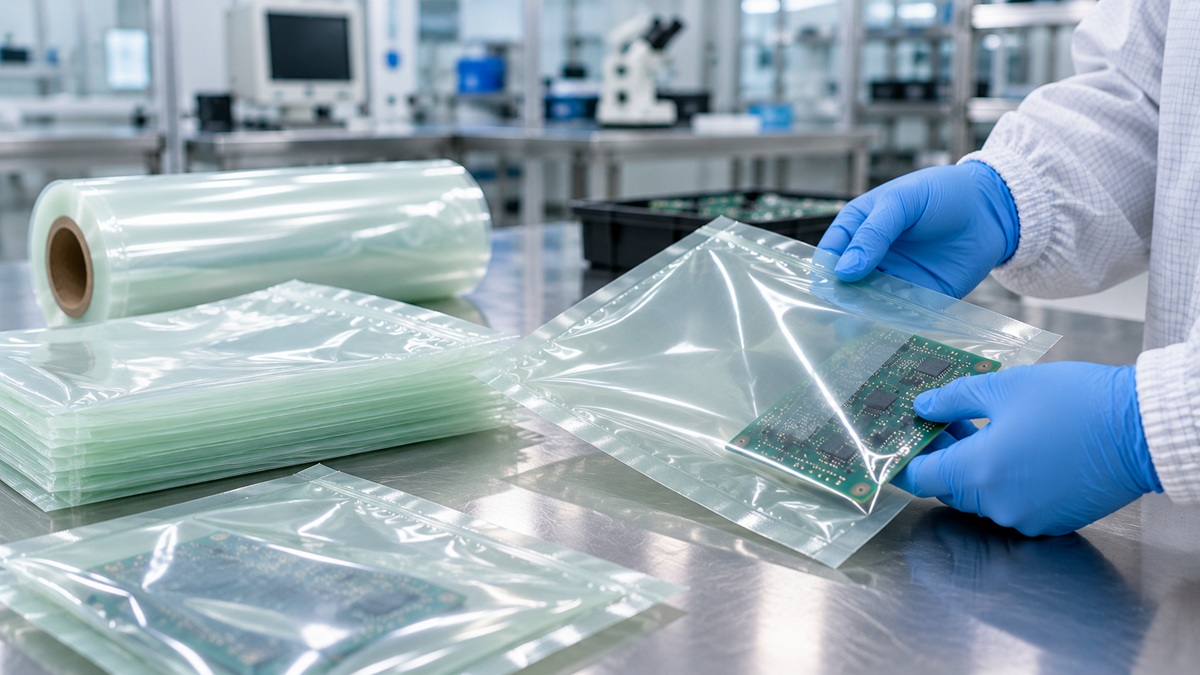
Pristine Green® Bio-Based Cleanroom Bags and Films
Pristine Clean Bags® offers Pristine Green® bio-based LDPE cleanroom bags and films for manufacturers evaluating alternatives to conventional fossil-derived polyethylene.
The product line provides an option for companies interested in incorporating renewable feedstocks into their cleanroom packaging programs while maintaining the material performance required for sensitive applications.
Pristine Green has published laboratory testing information covering mechanical properties such as tensile strength, elongation, impact resistance, and seal strength. These characteristics are important when evaluating packaging for manufacturing, handling, and transportation.
Manufacturers can review the available technical information and compare Pristine Green with their existing packaging specifications before considering a material change.
The product line may also offer opportunities for film downgauging, depending on the application and required performance.
7. Review Packaging Requirements Before Making Changes
A packaging change that reduces material consumption must still meet the application’s quality and performance requirements.
This is particularly important in regulated manufacturing environments where packaging specifications may form part of approved production procedures.
Before implementing changes, manufacturers should involve relevant engineering, quality, and procurement personnel.
A practical evaluation should address the following areas:
Changes should be evaluated through appropriate testing and internal approval procedures before implementation.
For facilities with established packaging specifications, a controlled trial can help determine whether a proposed material reduction provides practical benefits.
8. Measure Plastic Waste to Identify Further Improvements
Waste reduction programs are easier to evaluate when facilities measure material consumption before and after implementing changes.
A useful starting point is to establish a baseline for frequently used packaging products.
This may include:
- Number of bags consumed per production batch
- Total weight of polyethylene packaging purchased
- Packaging waste generated during production
- Quantity of unused or damaged bags discarded
- Packaging rejection rates
- Amount of eligible material sent for recycling
For example, if a facility uses 100,000 bags annually and reduces the weight of each bag by 2 grams, the theoretical annual material reduction is:
100,000 bags × 2 grams = 200 kilograms of plastic
Actual savings will depend on production volumes, packaging waste, and whether the revised packaging continues to perform as required.
Tracking these figures over time helps facilities identify which changes deliver measurable reductions in material consumption.
It also provides useful information for internal sustainability reporting and future packaging procurement decisions.
Reducing Plastic Waste Starts With Better Packaging Decisions
Reducing plastic waste in cleanroom packaging begins with examining how materials are selected, used, and discarded.
Appropriate bag dimensions, film downgauging, cut-to-length tubing, and improved handling procedures can help reduce unnecessary polyethylene consumption. Recycling may provide additional opportunities where materials and contamination conditions permit.
Bio-based LDPE offers another option for manufacturers interested in reducing reliance on fossil-derived feedstocks.
Every proposed change should be evaluated against the cleanliness, strength, sealing, and handling requirements of the application. Measuring material consumption and packaging waste can then help manufacturers assess the results.
Explore Cleanroom Packaging Options From Pristine Clean Bags®
Pristine Clean Bags® supplies cleanroom bags, tubing, and films for medical, pharmaceutical, semiconductor, aerospace, and other contamination-sensitive manufacturing applications.
Our product selection includes conventional LDPE cleanroom bags, polyethylene tubing, and Pristine Green® bio-based LDPE bags and films.
If your organization is reviewing packaging material consumption or exploring alternatives to conventional LDPE, our team can discuss available materials, dimensions, and packaging formats for your application.
Contact Pristine Clean Bags® at (410) 581-0303 or info@pristinecleanbags.com to discuss your cleanroom packaging requirements.
Frequently Asked Questions
Yes. Reviewing bag dimensions, reducing unnecessary film thickness where feasible, and improving handling and sealing procedures can lower plastic consumption while retaining the same general packaging material. The potential savings depend on the application and existing packaging specifications.
Thinner film uses less material for equivalent dimensions and density, but it must provide sufficient protection. If thinner packaging leads to more damage or rejected bags, the expected waste reduction may not be achieved.
Some used cleanroom bags may be eligible for recycling, depending on their material composition, contamination history, and available recycling facilities. Bags exposed to hazardous or regulated substances may require specialized disposal.
Not necessarily. Bio-based refers to the origin of the raw materials, while biodegradability describes how a material breaks down under specific conditions. Bio-based polyethylene may have the same resistance to biodegradation as conventional polyethylene.
Bio-based LDPE may be suitable for applications currently using conventional LDPE, but compatibility should be verified before making a change. Manufacturers should evaluate material properties, cleanliness requirements, seal performance, and any applicable qualification procedures.
Manufacturers can compare the weight of packaging materials used before and after implementing changes, accounting for production volume, rejected bags, and process waste. Tracking these figures over time helps determine whether material reductions produce measurable savings.